
UC Davis Procurement Results 2026

UC Davis
UC Davis Achievements by Strategic Pillar
Economic and Community Impact
Supplier Integration Channels Spend to Certified Small Business
UC Davis embedded supplier diversity in everyday lab purchasing by routing Fisher Scientific orders through certified small business Possible Missions.

Challenge
Life-sciences shoppers needed a way to route selected Fisher Scientific purchases through a certified small and woman-owned business without leaving the familiar catalog experience.
Approach
UC Davis launched the Fisher Scientific-Possible Missions integration in January 2026, extending a UC procurement model that routes selected life-sciences purchases through a certified small and woman-owned business without changing the shopper's Fisher catalog experience.
Result
In the first three months, UC Davis processed nearly 700 purchase orders representing more than $418,600 in spend through Possible Missions.
Related Links:
Possible Missions Partnership with Fisher Scientific
Related Annual Report pillar page
Why it matters
This integration makes small-business participation part of the normal eProcurement workflow, helping UC direct routine scientific purchasing toward economic and community impact while preserving familiar products, pricing, and fulfillment.
| At a Glance |
|---|
| ~700 POs Opened in first 3 months |
| $418,600+ Spend in first 3 months |
Mail Services Saves Gas & Time without Sacrificing Service
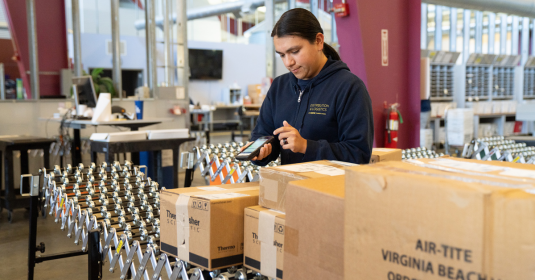
On-demand mail pickups cut route miles by 35% and service time by 25%, reducing fuel use and emissions while preserving same-day pickup.
Challenge
Daily mail stops at low-activity locations wasted fuel and time. UC Davis Mail Services found that 50 to 65 percent of stops did not need daily service.
Approach
UC Davis Mail Services moved low-activity locations to on-demand pickup after finding that 50-65% of stops did not need daily service.
Result
In a 40-stop pilot, daily stops fell to 26, mileage dropped 35% from 21 to 13.65 miles, and route time decreased 25%.
Related Links:
Logistics Lauches Adhoc Mail Services
Related Annual Report pillar page
Why it matters
The model also saved one gallon of gas and an estimated 20 pounds of carbon dioxide per day, while requests submitted before 2 p.m. still received same-day pickup.
| At a Glance |
|---|
| 35% mileage reduction 21 down to 13.65 miles |
| 25% reduction in route time |
| 1 gallon Of gas saved daily |
| ~20 lbs CO2 Avoided daily |
A Smarter Last Mile at UC Davis
Amazon Dedicated Delivery brings eligible orders to campus in consolidated shipments for same-day delivery, preserving service while reducing vehicle traffic.

Challenge
Amazon orders still arrived through outside delivery traffic even as UC Davis expanded its Last Mile Initiative. The campus needed consolidated delivery that used existing Mail Services routes.
Approach
UC Davis extended its Last Mile Initiative by adding Amazon Dedicated Delivery in February 2026. Eligible Amazon orders placed through Aggie Enterprise now default to consolidated delivery: pallets arrive at Central Receiving, packages are assigned in AggieLogistics, and campus Mail Services employees complete same-day delivery using existing routes. Recipients receive confirmation once items arrive.
Result
This new process preserves the speed of Amazon delivery while reducing outside vehicle traffic and CO2 emissions. It also saves fuel and time by using existing delivery routes and staff.
Related Links:
Amazon Dedicated Delivery Preserves Prime and Last Mile Benefits
Related Annual Report pillar page
Why it matters
This model supports the university's sustainable logistics strategy and preserves fast, free delivery while reducing outside vehicle traffic and relying on staff familiar with campus buildings and access requirements.
Continuous Improvement
UC Davis Athletics Banking on Instant Card Program
UC Davis Athletics replaced travel meal cash advances with secure virtual Instant Cards for about 650–700 student-athletes, with intentions to expand it to other functions.

Challenge
Cash advances for student-athlete travel meals created extra work for coaches and complicated expense reconciliation.
Approach
UC Davis Athletics introduced secure virtual Instant Cards, giving staff a direct way to issue meal funds to approximately 650–700 student-athletes.
Result
Athletes receive funds more efficiently, coaches skip trips to the bank, and centralized tracking strengthens financial oversight. Plus, increased bank card use returns revenue to UC. UC Davis is now expanding the program to guests and infrequent travelers to reduce out-of-pocket costs and reimbursements across campus.
Related Links:
UC Davis Athletics Banking on Instant Card Program
Related Annual Report pillar page
Why it matters
This program has reduced risks of cash handling, increased efficiency and security, returned revenue to UC, and reduced reconciliation times.
| At a Glance |
|---|
| 650-700 Student athletes benefitting from program |
| One account Used for reconciliation instead of separate expense reports |
| Better oversight Centralized tracking and no cash handling |
| Revenue Bank card use brings revenue back to UC |
Student Talent Powers Travel Payment Modernization
A U.S. Bank-funded internship helped UC Davis launch Instant Card and give a student hands-on implementation experience while retiring the legacy system.
Faster Purchasing for Routine Needs
UC Davis raised its automatic purchase order limit to $49,999.99 to speed up routine transactions and free staff to focus on complex purchases.
Travel Justifications Now Built Into AggieExpense
UC Davis moved airfare-upgrade and above-limit lodging justifications into AggieExpense, keeping documentation with the expense and reducing attachment handling.
Closing the Loop on No-Cost Agreements
UC Davis now closes related purchase orders when reviews are complete, reducing unnecessary encumbrances while keeping agreements valid and POs re-openable for amendments.
SB First: Simpler Exceptions with Better Supplier Discovery
UC Davis removed a waiver step when no suitable certified small or disabled veteran-owned business is available while maintaining commitment to the program and improving how departments find them.
One Form, Smarter Routing
UC Davis replaced fragmented service and technology assessment PDF paperwork with guided DocuSign forms that simplify submissions and route requests based on relevant details.
Risk Management
Clearer Controls = Smoother and Safer Campus Events
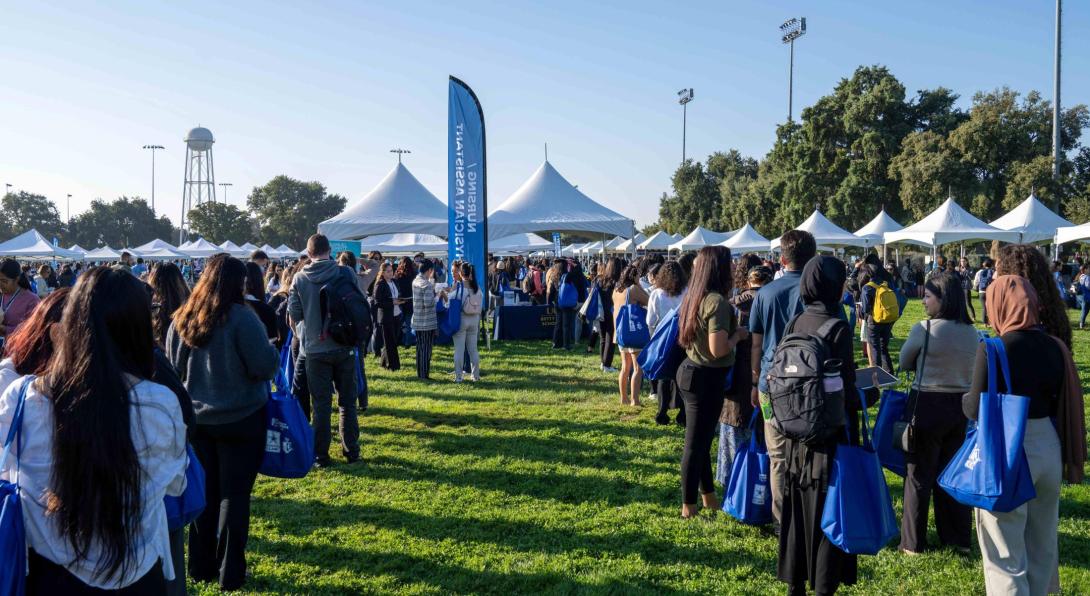
UC Davis clarified campus event booking and digitized alcohol permits, making requirements easier to track while strengthening oversight.
Challenge
Non-university groups using campus facilities needed clearer Conference and Event Services routing, and alcohol permits still relied on paper signatures.
Approach
UC Davis strengthened event governance through clearer Conference and Event Services routing and a new digital alcohol-permit process. Non-university groups using campus facilities or Housing must work through CES so eligibility, venue, rates, facility agreements, insurance, and liability responsibilities are addressed and tracked.
Result
In May 2026, the Permit to Serve Alcoholic Beverages moved from paper signatures to DocuSign, allowing requesters to track status, reopen completed permits, and clone similar submissions.The existing 10-day submission deadline and post-approval change controls remain.
Related Links:
New Process Streamlines Alcohol Permit Process
Related Annual Report pillar page
Why it matters
The smoother and clearer process makes it simpler for everyone, but increased oversight and tracking improves compliance.