
UC San Diego Procurement Results 2026

UC San Diego
UC San Diego Achievements by Strategic Pillar
Economic and Community Impact
Surplus Sales Diverts 1.4M Pounds and Generates $1.26M+
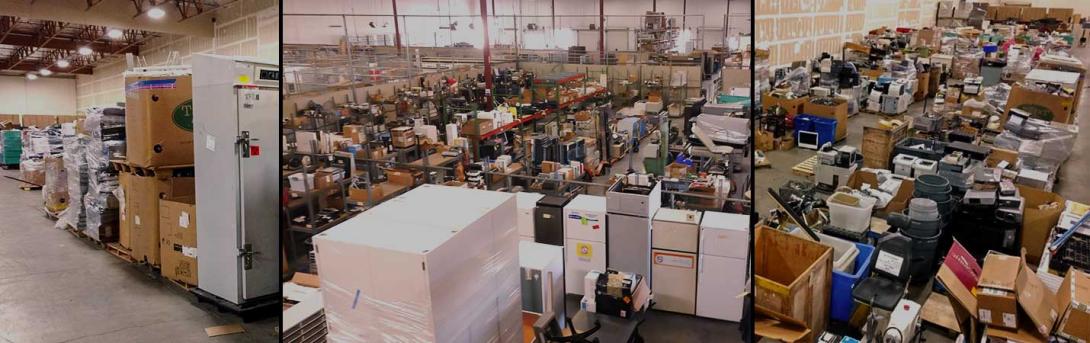
UC San Diego Surplus Sales diverted 1.38 million pounds from landfill while generating more than $1.26 million through reuse, sales, recycling, and donations.
 Challenge
Furniture, technology, vehicles, and specialized research equipment no longer needed by campus departments still represented usable assets and potential value. UC San Diego needed a responsible way to redeploy, sell, recycle, or donate those materials rather than send them to landfill. Managing that volume also required a coordinated process capable of serving departments across a wide range of asset types.
Approach
A cross-functional team of 10 staff members supported 1,485 surplus transfer requests, helping redeploy assets ranging from office furniture and technology to vehicles and specialized research equipment through internal reuse, external sales, recycling, and donation efforts. The program provides multiple pathways for equipment and materials to remain in productive use or be responsibly diverted from disposal.
Result
In FY2025-26, UC San Diego Surplus Sales diverted 1.38 million pounds of material from landfill and generated more than $1.26 million through the program. Those results reflect activity across external sales, internal reuse, recycling, and donation efforts.
Related Links:
Related Annual Report pillar page
Why it matters
The program combines sustainability, responsible resource stewardship, and financial value by extending the useful life of university assets and finding productive alternatives to disposal. The work helps UC San Diego maximize value from assets that departments no longer need while reducing the amount of material sent to landfill.
| At a Glance |
|---|
| 1.38M lbs Diverted from landfill. |
| $1.26M+ Generated through the program. |
| 1,485 Requests Surplus transfer requests supported. |
Procurement Secures No-Cost EV Pilot for Campus Safety
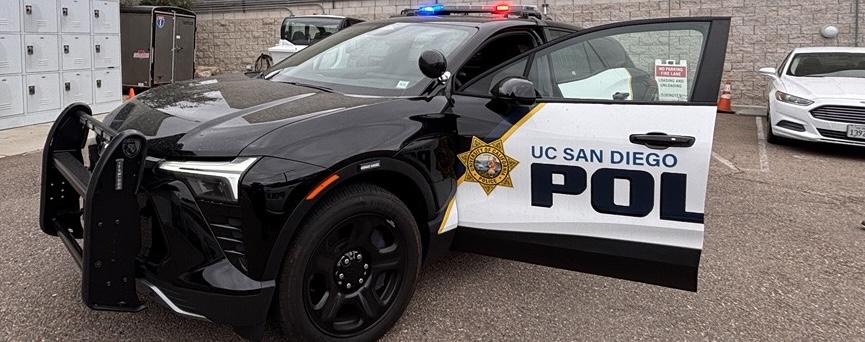
UC San Diego Procurement secured a six-month, no-cost pilot of two electric Chevrolet Blazers to evaluate EV performance in real-world public-safety operations.
 Challenge
When Highland Electric approached the UC San Diego Police Department about testing electric vehicles for the public-safety market, the campus needed a way to evaluate whether the technology could meet operational requirements without committing university capital funds. The Police Department also needed real-world information about factors such as battery range, cargo storage, and transport capabilities before determining whether electric vehicles could support public-safety work.
Approach
UC San Diego Procurement facilitated and executed a six-month equipment loan agreement at no cost to the University. The pilot provides two fully outfitted electric Chevrolet Blazers: one pursuit-rated patrol vehicle and one administrative vehicle for community events. UC San Diego's defined campus geography and comparatively lower daily mileage provide an environment for evaluating battery range, cargo storage, and transport capabilities in real-world public-safety operations.
Result
The agreement allows the Police Department to test field performance and provide direct operational feedback to the manufacturer without financial risk to the University. That feedback can also help inform the manufacturer's entry into the public-safety vehicle market while giving UC San Diego firsthand experience with the technology.
Related Links:
Related Annual Report pillar page
Why it matters
The pilot advances UC San Diego's sustainability goals while providing a model for evaluating emerging green fleet technologies through supplier partnerships before committing capital funds. It gives the University an opportunity to assess operational performance directly while avoiding the financial risk of purchasing vehicles before their suitability is understood.
| At a Glance |
|---|
| 2 Electric Vehicles Included in the pilot. |
| 6-Month Loan Equipment loan period. |
| No Cost Equipment provided at zero cost to the University. |
Strategic Partnerships
UC San Diego Reimagines Industry Partnerships
UC San Diego's inaugural Partnership Summit brought together 110 industry executives and university leaders to advance more integrated, mission-aligned partnerships.

Challenge
UC San Diego works with industry partners across nearly every area of the university, but these relationships historically developed through separate departments and individual transactions. Many corporate partners had connections with different schools, departments, or researchers without a holistic relationship across the institution. UC San Diego sought a more integrated approach that could better connect industry partners with university priorities and create longer-term, mission-aligned relationships.
Approach
Chief Procurement Officer Ted Johnson and his team collaborated with Vice Chancellor for Research and Innovation Corinne Peek-Asa to expand UC San Diego's approach to industry engagement. Building on the Campus Partnership Program, the inaugural Partnership Summit brought together 110 industry executives and university leaders for interactive discussions and co-design sessions. Conversations focused on research and innovation collaboration, resilient infrastructure, talent development, sustainable supply chain, AI, ethics and human-centered transformation, and data and digital infrastructure.
Result
The summit created a dedicated forum for candid dialogue, stronger connections, and new approaches to collaboration between UC San Diego and its industry partners. The co-design sessions generated new pilot projects to further connect academia and industry while providing experiential learning opportunities for students. Rady School of Management students also captured insights from the sessions for a planned white paper identifying common themes and actions to improve collaboration.
Related Links:
Full story at UC San Diego Today
Related Annual Report pillar page
Why it matters
The summit advances UC San Diego's shift from transactional supplier relationships toward deeper, institution-wide partnerships built around shared priorities and long-term value. UC San Diego plans to continue the Partnership Summit model and may expand the approach across the broader University of California system.
| At a Glance |
|---|
| 110 Participants Industry executives and university leaders brought together. |
| 7 Focus Areas Topics explored through interactive co-design sessions. |
| New Pilot Projects Initiatives emerged from the summit's co-design sessions. |
Drive Value and Savings
Building the Future of Ocean Discovery
UC San Diego secured a $35.52 million best-value bid for a new hybrid-electric research vessel, generating approximately $3.34 million in calculated savings.
Challenge
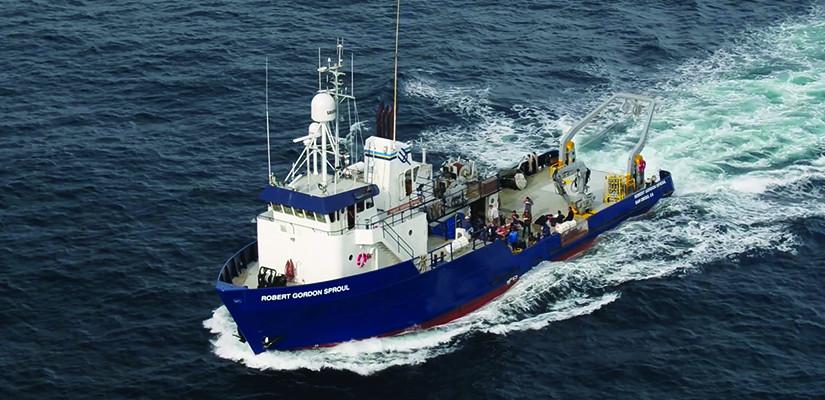
For more than 40 years, the Robert Gordon Sproul has supported ocean science and trained generations of Scripps scholars, but the vessel is nearing the end of its service life. UC San Diego needed a competitive, best-value procurement for a new 125-foot hybrid-electric Coastal Class Research Vessel capable of supporting multidisciplinary ocean research and student training. The need comes as researchers face increasingly complex coastal and climate challenges, including sea-level rise, ocean acidification, harmful algal blooms, atmospheric rivers, and other changes affecting marine environments.
Approach
UC San Diego's Integrated Procure-to-Pay Solutions facilitated the procurement of design and construction services for the Coastal Class Research Vessel. An international request for proposals drew bids from six shipyards across North America, South America, and Europe. Nine evaluators with expertise in operations, research, maritime construction, and naval vessel procurement conducted the best-value evaluation that resulted in the selection of Astilleros Asenav S.A. in Chile.
Result
The successful bid totaled $35,521,864 and represented $3,336,864 in calculated savings. Construction is underway at Astilleros Asenav S.A., with delivery anticipated in late 2028. The vessel is being designed as a multipurpose platform for research ranging from shallow coastal waters to the open ocean offshore California.
Related Links:
Related Annual Report pillar page
Why it matters
The low-emission, low-noise vessel will support research across physical oceanography, atmospheric science, marine biology, chemistry, and geology. It is designed to accommodate up to 15 scientists on missions lasting up to 11 days, or 40 students on one-day deployments.
| At a Glance |
|---|
| $35.52M Selected bid. |
| $3.34M Calculated savings. |
| 6 Shipyards Submitted international proposals. |
Campus Inquiry Leads to Systemwide Freight Savings
A review of rising Illumina freight charges identified a 93% cost reduction opportunity and $98,634 in potential savings through UC's inbound freight program.
Powering Campus Reliability Through Strategic Partnership
An eight-year steam-turbine maintenance agreement is delivering approximately $113,486 in annual savings while supporting reliable campus utility operations.
Challenge
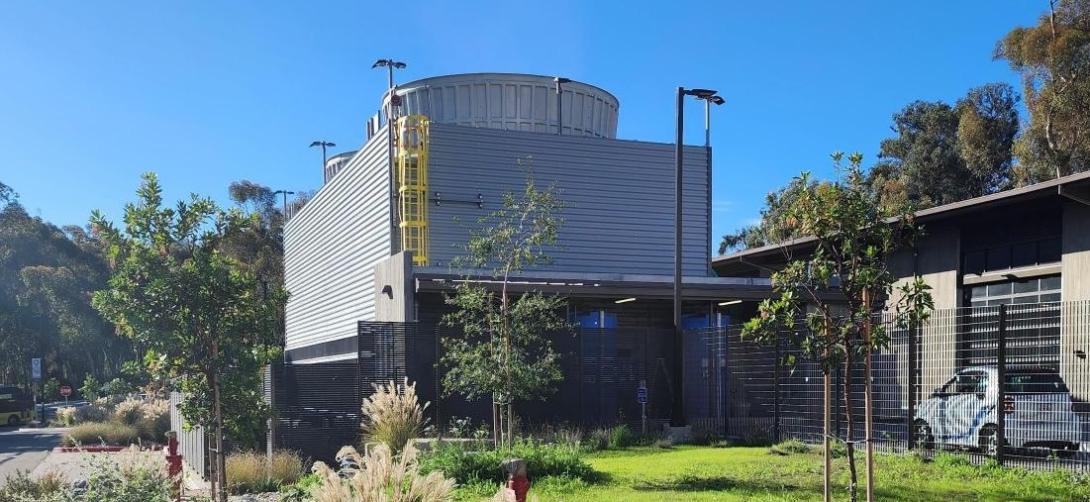
Steam turbines are essential to maintaining reliable utility services across UC San Diego, making proactive maintenance critical to uninterrupted campus operations. The Central Utility Plant needed a long-term maintenance agreement with predictable pricing aligned to its planned turbine overhaul cycle. The sourcing strategy also needed to support the campus's longer-term infrastructure planning rather than address maintenance needs one transaction at a time.
Approach
UC San Diego Procurement partnered with the Central Utility Plant to competitively source an eight-year steam-turbine maintenance agreement with Turbine Repair Services LLC. The agreement establishes fixed pricing aligned with the campus's planned overhaul cycle and provides a piggybacking option for other UC campuses. This structure connects the procurement strategy directly to the CUP's long-term maintenance and infrastructure requirements.
Result
The agreement delivers $113,485.75 in annual savings, totaling $907,885.99 across the eight-year term. Fixed pricing improves cost predictability across the planned overhaul cycle, while the piggybacking provision makes the agreement available for potential use beyond UC San Diego.
Related Links:
Related Annual Report pillar page
Why it matters
By aligning strategic sourcing with the Central Utility Plant's long-term infrastructure strategy, the agreement improves cost predictability and supports the reliability of critical campus utility systems. The piggybacking option also extends the potential benefits of the competitively sourced agreement to other UC campuses.
| At a Glance |
|---|
| $113,486 Annual savings. |
| $907,886 Savings over the eight-year term. |
| 8 Years Maintenance agreement term. |
Risk Management
UC San Diego Streamlines Hospitality Contract Review
A standardized Hospitality Contract Addendum has achieved more than 90% supplier acceptance while generating $36,825 in annual buyer-efficiency savings.
Challenge
Hospitality contracts frequently arrived on supplier forms that lacked UC Terms and Conditions of Purchase and provided limited legal protections for the University. The hospitality buyer had to manually review and redline each agreement, creating a time-intensive contract review process. Because the supplier's form typically served as the starting point, each transaction required individual negotiation to establish protections appropriate for UC San Diego.
Approach
UC San Diego helped design and launch a purpose-built Hospitality Contract Addendum that makes the University's contract the governing document for venue and event-services agreements. The addendum incorporates UC-compliant hospitality terms covering Net 30 payment, deposits capped at 50%, cancellation provisions, supplier resell obligations, mutual indemnity, third-party liability, pandemic protections, intellectual property, and other key areas. The addendum is designed to supersede the supplier's contract and establish a consistent starting point for hospitality engagements.
Result
More than 90% of suppliers have accepted the addendum, and the standardized process has generated $36,825 in annual buyer-efficiency savings by reducing contract-by-contract redlining. The approach also establishes a more consistent legal posture across hospitality agreements while maintaining supplier relationships.
Related Links:
Related Annual Report pillar page
Why it matters
The addendum helps UC San Diego protect the University, save buyer time, and reduce contract risk by making consistent UC-favorable terms the starting point for hospitality agreements.
| At a Glance |
|---|
| 90%+ Supplier acceptance rate. |
| $36,825 Annual buyer-efficiency savings. |
| 150+ Days 100% refund provision for qualifying cancellations. |